There’s an open house this weekend of a charming postwar cottage for sale in Silver Spring, Maryland, with some special qualities that are hidden in plain sight.

1948 Gunnison Home prefab. 9130 Walden Rd., Silver Spring, MD
The front exterior brick chimney with metal “S”-curve embellishment, metal interior chimney with double vent slits, and vertical seams on the interior walls (spaced every four feet) clearly identify the house as a late 1940s Gunnison Home prefab. In fact, it’s one of twelve Gunnison Homes constructed on Walden Road, on the block between E. Melbourne Avenue and Saffron Lane, with at least one more around the corner on E. Melbourne.
[Update: 9130 Walden Rd. was sold again in 2014! See interior pics on the listing page.]
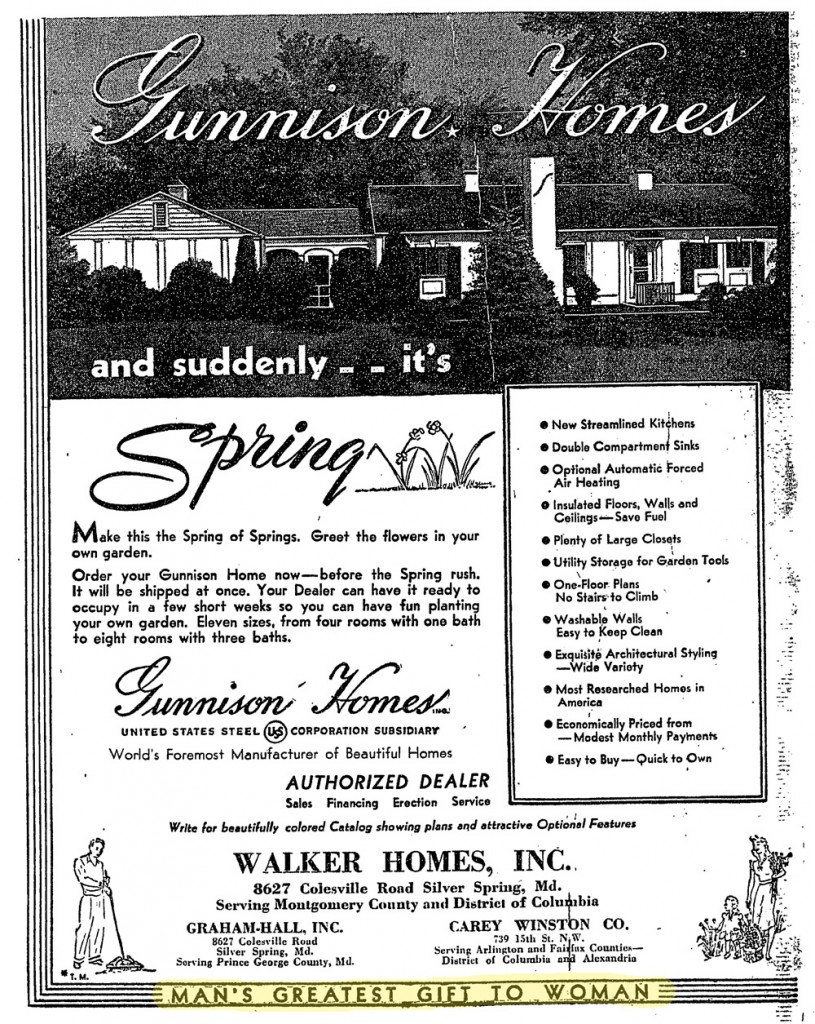
1947 Gunnison Homes “Man’s Greatest Gift to Woman” ad placed by local dealer Walker Homes, Inc.
The company’s founder, Foster Gunnison had made the leap from prefab promoter to prefab entrepreneur. In the early 1930s, Gunnison worked as the creative marketing director of American Houses’ “Motohome,” one of the most complete prefabricated house packages of the 20th century. The Motohome, not to be confused with wht we call a “motorhome” today, came equipped with everything from a built-in electric clock, radio and cigarette lighter, to a two-day supply of groceries. In 1935, Gunnison launched his own prefabricated housing company founded in New Albany, Indiana.
First named Gunnison Magic Homes, the company made significant developments in stressed-skin plywood panel manufacturing, and it was the first prefab housing company to use a moving production line. The house’s 4′ wide, 2” thick story-height panels were constructed of plywood sheets bonded in a heat-press process to a wood box-girder frame with 1-1/2” ribs. A higher quality hardwood plywood was used on the interior of the living room wall panels. Doors and windows were built right into the panels during factory assembly. Individual customers could purchase Gunnison Homes through local dealers, choosing from several traditional home styles at comparatively low cost. When several Gunnison Homes survived the 1937 Ohio River flood, word spread of the plywood houses’ quality construction.
By the start of World War II, Gunnison Homes had grown to be a leader in the prefabricated housing industry. By the height of the war, the New Albany factory was producing 600 homes per month for war housing projects nationwide. The company was purchased by U.S. Steel Corp. in 1944 and continued production until 1974.
I’ve spotted several dozen Gunnison Homes in Silver Spring and Kensington, Maryland, with more to be confirmed in Rockville, Chevy Chase, Hyattsville, and Forestville, Maryland, and in Falls Church, Annandale and Arlington, Virginia. Models ranged from the more traditional, cottage-style homes of the late 1940s:
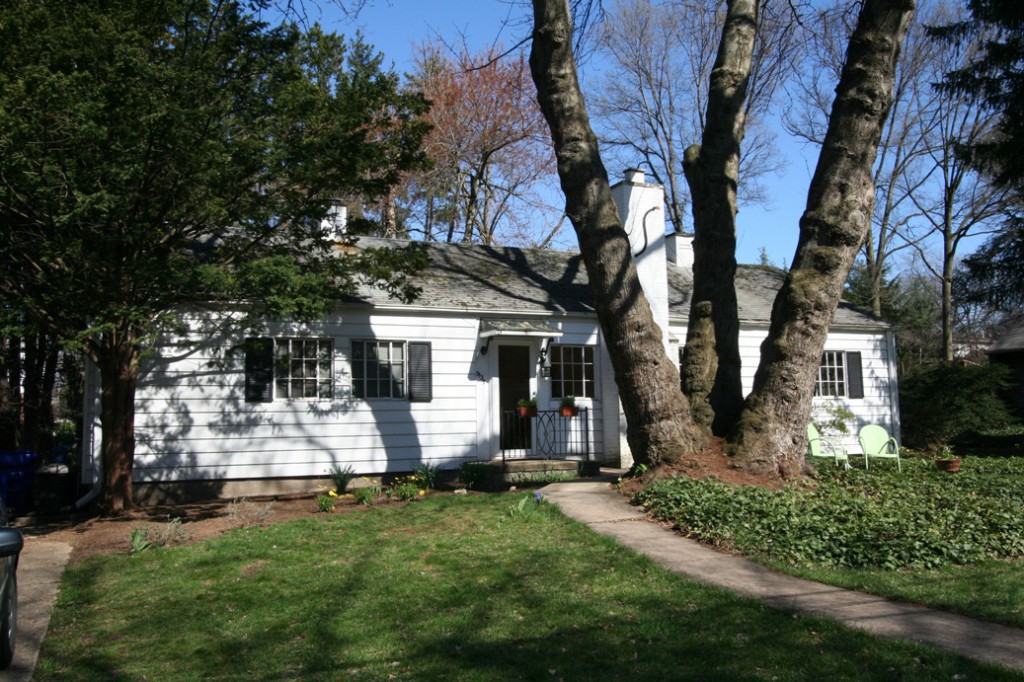
Gunnison Home 1947, Walden Rd., Silver Spring, MD
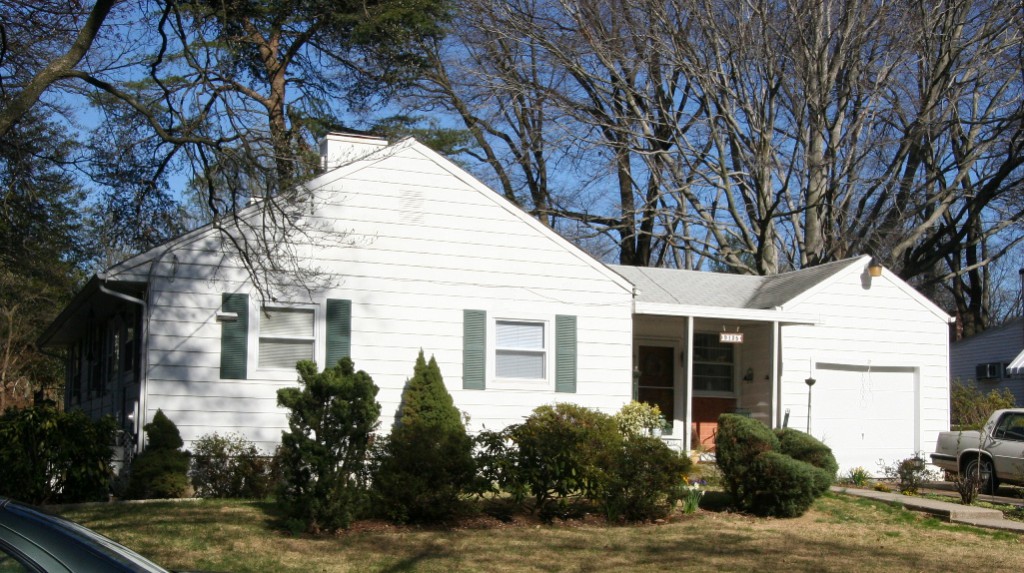
Gunnison Home 1947, Walden Rd., Silver Spring, MD
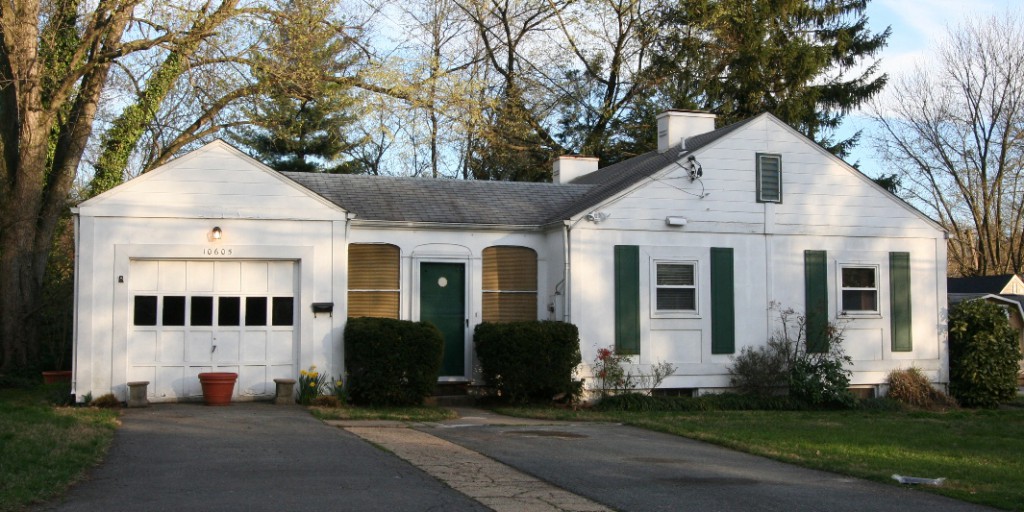
Gunnison Home 1949, St. Paul St., Kensington, MD
… to the simplified, contemporary ranch house designs of the early 1950s:
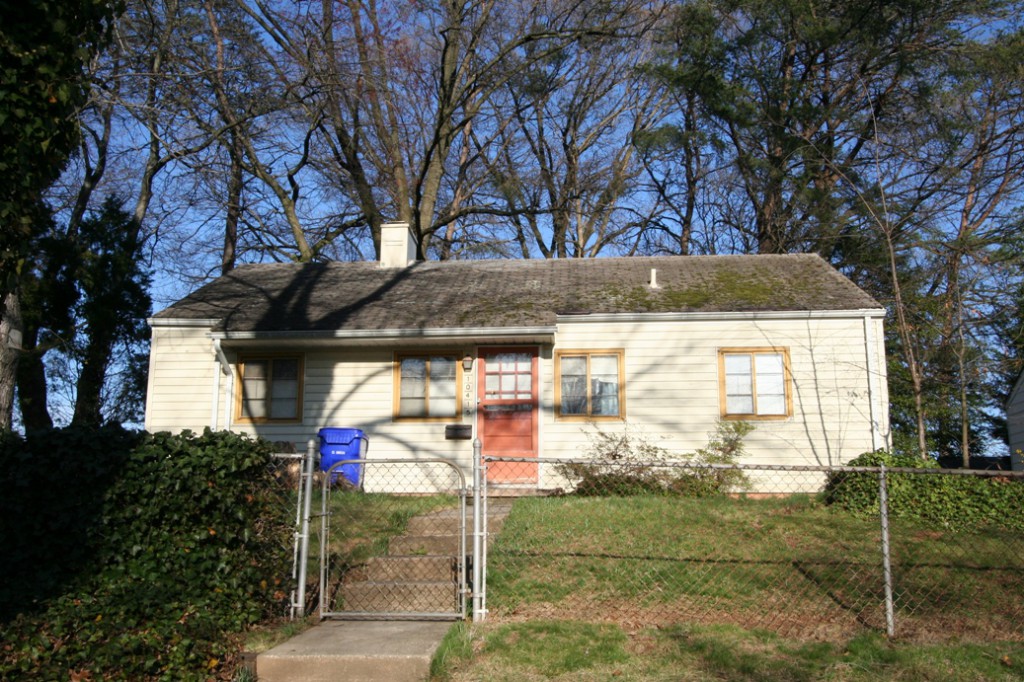
Gunnison Home 1950, 10415 Julep Avenue, Kensington, MD

Gunnison Home “Coronado” model 1952, 3212 Edgewood Rd, Kensington, MD
If you think you live in a Gunnison, be sure to look for the small metal Gunnison Homes plaque and serial number in the utility closet or by the back door.
Sources:
Johnson, Cynthia E. House in a Box: Prefabricated Housing in the Jackson Purchase Cultural Landscape Region, 1900-1960. Frankfort: Kentucky Heritage Council, 2006.
Bruce, Alfred and Harold Sandbank. A History of Prefabrication. Original edition published under the title, Housing Research. Vol. 3. Reprint. New York: Arno Press, [1944] 1972.
Kelly, Burnham. The Prefabrication of Houses. New York: MIT Press and John Wiley and Sons, Inc., 1951.
Carr, A.L. A Practical Guide to Prefabricated Houses. New York and London: Harper & Brothers, 1947.
Shipp, Randy, “Gunnison Homes – Industry Innovator,” DOCOMOMO US Newsletter, Summer 2008, 5.
 Jennifer Sale Crane . architectural historian
Ms. Crane,
It was a pleasure to stumble across your posting. I have been researching Gunnison Homes for almost eight years now and find them fascinating. While I knew of one example in Kensington, I had only heard rumors about examples in Silver Springs. Your article is very interesting. I would like to hear more!
Randy Shipp
Just found out yesterday I bought a Gunnison home. Want to find out more – seems intriguing. House was built in 1952 and the metal plate is located in the closet in the front living room. Hmmm … my rehab plans may be more difficult than I expected.
Researching hard. I think I am in one. Roof vent. Sticker in attic says US Steel Homes. 1939 on deed. Please help.
We live in a Gunnison in northern Indiana. We have begun to tackle a bathroom remodel, but are not sure how to go about it with the typical Gunnison wood panels on the walls (that are covered in glue from plastic tile). Does anyone have any ideas or resources? There is little info on these homes, but even less about remodeling them! We would love to keep the originality of the home intact.